Your driveway or parking lot might look clean today, but nature has a way of creeping in when you least expect it. Falling leaves and growing roots may seem harmless, but left unchecked, they can damage asphalt and permanently stain surfaces. The good news is that with a bit of awareness and some strategic action, you can stop these leaf stains and tree roots before they turn into expensive repairs.
Why Leaf Stains Happen
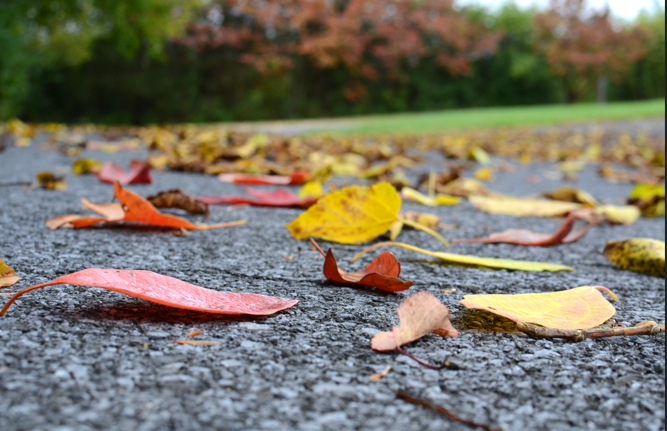
When leaves fall onto asphalt, they often bring tannins with them. These are natural plant acids that leach out when leaves get wet and sit too long. The darker the leaf, especially from oak, maple, or walnut, the stronger the tannins. If a damp leaf sits on your driveway for a few days, it can leave behind a dark, blotchy stain that doesn’t wash off easily.
These stains don’t just hurt your curb appeal. Over time, acidic residue can break down the protective seal on your asphalt, leaving it more vulnerable to water damage, UV rays, and wear.
How to Prevent Leaf Stains
The best defense is regular upkeep. Keep the surface clean and free of debris, especially during the fall. Blowing or sweeping leaves off your asphalt every few days makes a big difference. If your property is shaded by heavy foliage, increase how often you check for buildup.
Sealcoating every two to three years creates a protective barrier between your asphalt and the elements. A fresh seal not only helps prevent stains from setting in, but also extends the life of your pavement by guarding against moisture, oil, and sunlight.
It also helps to trim back overhanging limbs. Fewer falling leaves means fewer chances for staining in the first place. When trees shed in waves, stay ahead of the mess instead of waiting until the ground is covered.
Removing Leaf Stains Safely
If you do end up with leaf stains, don’t panic. Start by rinsing the area with warm water and scrubbing with a stiff brush and mild detergent. For newer stains, this might be all it takes. For more stubborn ones, a specialty asphalt cleaner designed to break down organic material will work better.
Avoid using bleach or harsh chemicals not rated for asphalt. These can damage the surface and strip away protective sealant. After cleaning, always rinse thoroughly and let the area dry. If stains persist, consider resealing the surface to lock in a fresh, uniform look.
How Tree Roots Affect Asphalt
Roots are more than a cosmetic issue. As trees grow, their roots expand outward and upward in search of water. Asphalt, while strong, isn’t immune to pressure from below. Roots can slowly push up the pavement, creating cracks, bumps, and even raised edges that become trip hazards or damage vehicles.
This type of damage often starts subtly. A small crack one season turns into a heaved section the next. If ignored, root damage can compromise the entire structural base of your driveway or parking lot.
Preventing Root Damage Before It Starts
When installing new asphalt near trees, always consider the aggressiveness of the root systems. Species like silver maple, willow, and poplar are notorious for fast, shallow roots that reach out far beyond the tree’s canopy.
A good contractor will recommend installing root barriers, thick plastic or metal panels buried vertically between the tree and the pavement. These barriers redirect roots downward and prevent them from lifting the asphalt over time.
Spacing is also critical. If you’re planting new trees, keep them at least 10 to 20 feet away from any paved surfaces. The exact distance depends on the species, but more space is always better.
What to Do When Roots Break Through
If you’re already seeing damage, it’s time to act. Start by contacting an experienced paving contractor to assess the situation. In some cases, you may be able to grind down a raised section and patch the area. In others, the root itself must be removed or redirected to prevent further damage.
Simply cutting the root may seem like a quick fix, but it can harm the tree or cause it to become unstable. Tree roots are part of a living system, and removing one root without a plan can create new problems. Working with both a paving expert and an arborist is the safest way to address the issue without causing long-term harm to your trees or your pavement.
At Walt’s Paving, we’ve dealt with just about every root-related problem you can imagine. We know how to protect your investment and restore damaged asphalt in a way that lasts. Whether you need root barriers, patchwork, or a complete removal and repave, we’ll give you a plan that works for your property.
Maintaining a Healthy Balance
Trees are beautiful, and they offer shade, value, and visual appeal to any property. But you don’t want your landscaping to work against your asphalt. With the right approach, you can enjoy your trees without sacrificing your pavement.
Schedule regular property inspections to catch early signs of root pressure. Keep tree branches trimmed to limit falling leaves. And never underestimate the power of routine maintenance. A little effort now saves a lot of money later.
Wrap-Up: Protect Your Pavement from Nature’s Wear
Leaf stains and tree roots are two natural threats that property owners often overlook. But if you manage them proactively, they don’t have to be a problem. Quick cleanup, imaginative planting, sealcoating, and structural repairs can prevent minor issues from turning into full-scale replacements.
If your asphalt is showing signs of staining or root damage, don’t wait for it to get worse. Walt’s Paving can help you keep your surfaces clean, safe, and built to last. Call today and let’s take the hassle out of maintenance.
How can Walt’s Paving help?
You can count on Walt’s Paving to complete your residential or commercial paving project in an efficient and timely manner. We have over 40 years of experience paving asphalt driveways, making asphalt repairs, and sealcoating asphalt. We are located in Osceola, IN, and serve homeowners and businesses within a 50-mile radius of Elkhart, IN. Call us today!