Most homeowners only get a driveway paved once or twice in a lifetime. It makes sense to have questions about how the process works. Knowing what happens at each stage, from the estimate visit to the weeks after your crew leaves, helps you prepare your property and set realistic expectations. It also helps you get the most out of your new asphalt. Here is a walk-through of what a typical residential paving project looks like from start to finish.
Before the Project Starts
The process begins with an estimate visit. A member of the Walt’s Paving team comes to your property to assess the existing surface, measure the area, and talk through your options. You will receive a written quote that outlines the scope of work, so there are no surprises on paving day. Once you accept, the crew schedules your project based on workload and weather conditions.
Weather plays a real role in scheduling. Asphalt is a temperature-sensitive material. It needs to be laid and compacted while it is hot enough to work properly. If rain or a significant cold snap is in the forecast, your project may be pushed to the next available opening. Your crew will communicate any changes as early as possible.
A Few Days Before Paving
The most important thing you can do before paving day is to clear the driveway and the area immediately around it. Move all vehicles out of the driveway and arrange alternate parking for the days around your project. If you have fixed or semi-permanent items near the edges of your driveway, move those as well. This includes potted plants, basketball hoops, garbage cans, and outdoor furniture.
If you have pets or young children, make arrangements to keep them away from the work zone. An active paving crew works with heavy equipment and hot materials. The area will not be safe to walk through until the crew has finished and cleared out for the day. For a deeper look at property prep, check out our guide.
Paving Day
The actual process looks something like this.
Removal of the old surface, if applicable.
If your project involves replacing an existing driveway, paving day starts with removal. The old surface is broken up and hauled away before any new material goes down. This step may not apply if the crew is paving over a sound existing base.
Base preparation.
A quality finished surface depends on what is underneath it. The crew will grade and compact the base layer to support drainage and create a stable foundation. This step does not take visible shape quickly, but it has a major impact on long-term durability.
Asphalt laydown and compaction.
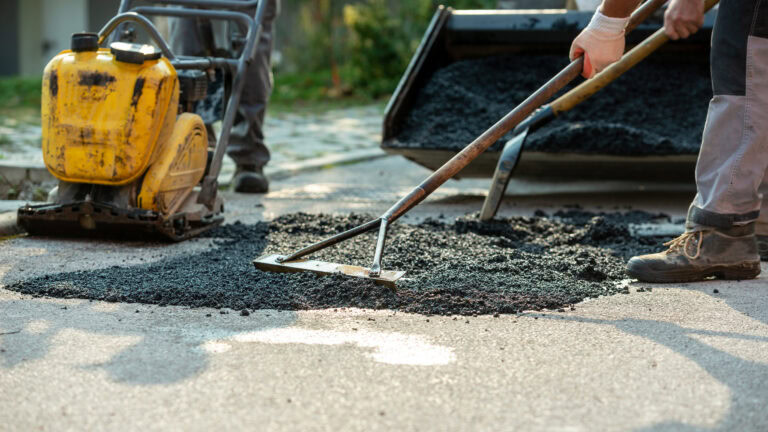
Hot asphalt mix is delivered and spread across the prepared base. It is then compacted with a roller to create a uniform, dense surface. This part of the job moves quickly once it starts. You may see the finished surface take shape in a matter of hours.
Edges and finishing.
The crew will address the edges of the driveway and any transition points before wrapping up. They will also do a final pass on the surface. Once they clear the site, your driveway will need time to cool, set, and continue curing before it can handle traffic.
After Paving: The First 30 Days
- 24 hours after paving: walking on the surface.
You can generally walk on fresh asphalt after about 24 hours. The surface will feel firm, but the asphalt beneath is still in an early stage of curing. Avoid dragging anything across it, and do not park on it yet.
- 48 to 72 hours after paving: driving on the surface is allowed.
Most residential driveways are ready for light vehicle traffic within 48 to 72 hours. In hot summer weather, that window may extend. Heat slows the curing process and can leave the surface more vulnerable to marks or depressions under load. When in doubt, wait an extra day.
- Avoiding common damage in the first 30 days.
The most common aftercare mistakes are easy to avoid once you know what to watch for. Sharp wheel turns made while a vehicle is stationary are called power steering scuffs. They can leave marks in soft asphalt. Pointed or concentrated loads, such as kickstands, high heels, and heavy jack stands, can punch into the surface. Parking in the same spot every day during hot weather can also create depression over time. Vary where you park during the first month. Try to avoid the edges of the driveway, where the asphalt may be more vulnerable. See our full aftercare checklist on our website!
When to Sealcoat
Not right away. Many homeowners assume sealcoating should happen immediately after paving to protect the new surface. It should not. Fresh asphalt needs time to cure and release oils before sealant is applied. Applying the sealer too early can trap oils in the surface and delay curing. A good rule of thumb is to wait at least 90 days. Many contractors recommend waiting closer to a full year before the first sealcoat application.
How Walt’s Handles Your Project
Walt’s Paving is a family-owned asphalt contractor that has served the Michiana area since 1972. Every project starts with a free estimate and no-pressure quote. The crew handles the work from removal through final compaction. If you have questions before, during, or after your project, you can reach the team directly.
Frequently Asked Questions
How long after paving can I walk on my driveway?
You can typically walk on a new asphalt driveway after about 24 hours. The surface will be firm enough for foot traffic, but the asphalt is still curing underneath.
How long until I can drive on a new asphalt driveway?
Most driveways are ready for light vehicle traffic within 48 to 72 hours after paving. In hot weather, plan for the longer end of that range or add an extra day as a buffer.
When should I sealcoat a new driveway?
Wait at least 90 days before applying sealcoat to a new asphalt surface. Many contractors recommend waiting closer to a full year so the asphalt can fully cure first.
Will the weather delay my paving project?
Yes, it can. Rain and cold temperatures affect how asphalt is laid and compacted, so your crew may need to reschedule if conditions are not right on your original paving day.
What can damage new asphalt?
In the first 30 days, the most common causes of damage are sharp steering turns on stationary vehicles, concentrated point loads such as kickstands or jacks, and parking in the same spot during periods of high heat.