Choosing between driveway resurfacing and full replacement comes down to this: is the damage mostly at the surface, or has the base, the compacted material supporting the asphalt, begun to fail? Resurfacing can be a practical way to extend the life of a sound driveway, while replacement is meant for pavement with deeper structural problems. The signs below can help you understand what you are seeing before you call a paving contractor.
What Is the Difference Between Resurfacing and Replacement?
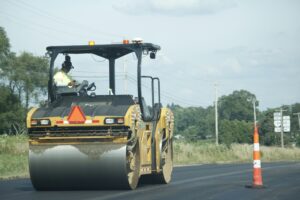
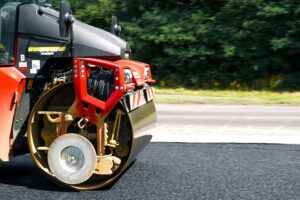
Resurfacing adds a new layer of asphalt over the existing driveway, while full replacement removes the old pavement and rebuilds the driveway before new asphalt is installed. Resurfacing is also called an overlay because a fresh layer of asphalt is placed over the existing surface. Before that layer goes down, isolated damaged areas may need repair so the new surface has a suitable foundation.
The important limitation is that resurfacing only gives the driveway a new surface. It does not correct serious movement or failure underneath the pavement. That is why the condition below the visible asphalt matters more than appearance alone when comparing driveway resurfacing vs replacement. If you are still deciding between paving materials rather than between two asphalt options, Walt’s comparison of asphalt vs. concrete covers that earlier decision.
When Can a Driveway Be Resurfaced?
Resurfacing is generally viable when the visible damage is limited to the surface and the supporting structure underneath is still stable. A faded or oxidized surface, meaning asphalt that has become gray and dry-looking with exposure, can be a resurfacing candidate. Surface cracks may also be manageable when they are limited and do not form an interconnected pattern across large areas of the driveway.
Minor, isolated potholes do not automatically mean the entire driveway needs to be replaced. Those areas may be repaired before resurfacing if the pavement around them remains stable. Other encouraging signs include a driveway that still drains as it always has and a surface without new dips, waves, or settled areas. If the damage is truly localized, asphalt repair may also be enough without resurfacing the entire driveway. In that case, doing less work can be the more appropriate choice.
When Does a Driveway Need to Be Replaced?
Full replacement is generally the right call when the problems point to failure beneath the asphalt rather than ordinary surface wear. One of the clearest warning signs is alligator cracking, an interconnected pattern of small cracks that resembles reptile skin. Multiple potholes that keep returning after previous repairs can also indicate that fixing the visible damage is no longer addressing the source of the problem. Those patterns matter more than a single crack or one isolated pothole.
Other signs include delamination, where the asphalt surface begins peeling or separating in sections, and new areas of standing water that were not present before. Dips, depressions, or waves can indicate that material beneath the pavement has moved or settled. Seeing one condition does not automatically settle the repair-or-replace question, but two or more of these problems together are a stronger reason to consider replacement. Walt’s residential paving information explains the type of work involved when a driveway has reached that point.
How Long Does Each Option Last?
A well-built asphalt driveway in Indiana that receives regular maintenance can often remain in service for 15 to 20 years, while a full replacement starts the pavement’s service life over with a new installation. Drainage, installation quality, traffic, weather exposure, crack repair, and maintenance all affect where a driveway falls within that range.
Resurfacing should be viewed as an extension of the existing driveway’s service life rather than a reset to a brand-new driveway. How much additional life it provides depends on the condition of the pavement before the work begins and how well the existing structure continues to perform. Age is useful context, but condition still matters more when deciding what work a driveway needs. Walt’s guide to how long an asphalt driveway lasts in Indiana explains the factors that influence pavement life in more detail.
Which Option Costs Less?
Resurfacing costs less than full replacement because the existing pavement stays in place and the project does not require complete removal and disposal. It can be a good value when the driveway is suitable for an overlay because the work preserves what is still functioning instead of rebuilding the entire pavement system. That is also why the least expensive appropriate option is not always the same from one driveway to another.
The size of the cost difference varies by property because replacement can involve removal, disposal, grading, and additional preparation before new asphalt is installed. Grading shapes the site so the driveway has the proper slope and drainage. A lower upfront cost does not make resurfacing the better choice if the existing pavement cannot support it, just as replacement adds unnecessary work when the existing structure is sound. Walt’s guide to getting an accurate asphalt paving quote explains what should be included when homeowners compare project scopes.
Not Sure Which One You Need?
A professional site evaluation is the best way to confirm resurfacing vs replacement when the condition below the surface is not clear from what you can see. Walt’s Paving offers free estimates for homeowners throughout St. Joseph, Elkhart, and LaGrange counties in Indiana and St. Joseph and Cass counties in Michigan. Contact Walt’s Paving or call or text (574) 242-2422 to discuss your driveway, and ask about available senior, veteran, and church discounts.